Blue-green deployment is right if you need a fast and dependable method to deploy new software versions with minimal downtime and straightforward rollback capabilities. Blue-green deployment is a strategy that makes use of two equivalent manufacturing environments, referred to as Blue and Green. A staging setting is right whenever you want a practical testing surroundings to validate new options and updates earlier than they go live. The staging environment allows builders and QA teams to conduct thorough testing to make certain that everything works as expected beneath situations just like the stay setting. The staging environment is a pre-production setting that mirrors the manufacturing setting as carefully as attainable. If one thing goes wrong – you shortly change back to the previous instance.
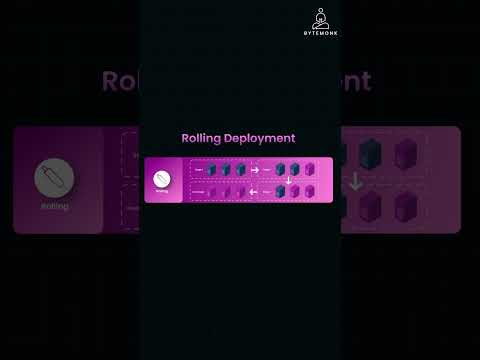
You might stop your present EC2 cases, deploy a new AMI with the updated utility, and restart the surroundings. A single, all-at-once launch the place the old system is taken down and the brand new model is introduced up. For many purposes, the elevated security, management, and minimal downtime will outweigh these challenges. It Is essential to weigh these issues in opposition to the advantages that rolling deployments deliver.
Cloud providers like AWS Elastic Beanstalk, AWS ECS, and Azure App Service offer AlexHost SRL built-in deployment strategies similar to rolling, blue-green, and canary deployments. If you’re utilizing Kubernetes, leverage its built-in assist for rolling updates and well being checks. It’s useful for environments like Kubernetes, which may manage rolling updates natively. Feature flags are a fantastic software to help you migrate from monoliths to microservices in a way that’s straightforward and protected. The architecture of your application (microservices vs. monolithic) will influence your alternative.
- In a standard improve, the load balancer closes all utility visitors for the servers to go offline and replace.
- Run two equivalent manufacturing environments, “blue” and “green,” and switch traffic between them.
- This method ensures that the deployment surroundings remains consistent and free from any potential unwanted facet effects of previous variations, making deployments more predictable and dependable.
- Regardless Of its benefits, blue-green deployment requires important sources, as maintaining two similar manufacturing environments may be costly.
- The results are analyzed to determine which version performs better or meets the specified objectives more effectively.
This will effectively degenerate your rolling deployment into blue/green deployment throughout a single hotfix release. It usually involved taking your utility offline, updating it, and then bringing it again up—all while crossing your fingers and hoping nothing went wrong. The plan takes the load balancer under consideration and removes the Tomcat servers from the load balancer when the node is being upgraded. You are using the F5 BigIp plugin, however this property is available on any load balancer plugin. Deploy supports numerous load balancers that are available as plugins.